
How to Get Fulton County Court Records
Try Indiana MyCase first. It is a free statewide search for public, nonconfidential Odyssey case summaries. One catch: the online entry may show an event while its filing image stays offscreen. For certified documents, older records, current financial answers, or files that are public but not displayed remotely, Dawn Ziemek, the Fulton County Clerk of Courts, remains the official source.
- Find the case in MyCase and confirm Fulton Circuit Court, code 25C01, or Fulton Superior Court, code 25D01.
- Write down the exact case number, document name or docket-event date, and number of copies.
- Inspect available images online, or request public inspection at 815 Main Street in Rochester.
- Call 574-223-2911 before mailing or visiting to confirm access, fee, payment method, delivery, and certification type. The state directory lists a different number, so verify the current county page.
- For mail or fax routing, use the courthouse address or published fax, 574-223-8304, after confirming safe submission instructions.
- Use the court reporter for a transcript and the clerk for a pleading, judgment, docket, or certified case record.
MyCase and Fulton County Record Images
The Indiana public court records page explains how the online search hands off to the local clerk. MyCase is a structured but unofficial public view. It is not the complete official file. Nonconfidential civil cases may expose more documents than criminal, infraction, family, juvenile, or protected matters. A blank document area means no image is available through that remote view. It does not mean the clerk has no filing.
The official state source illustrates the scope of Fulton County court-record access. Read it with the live access rules. Case type, redaction, and court orders control what appears.
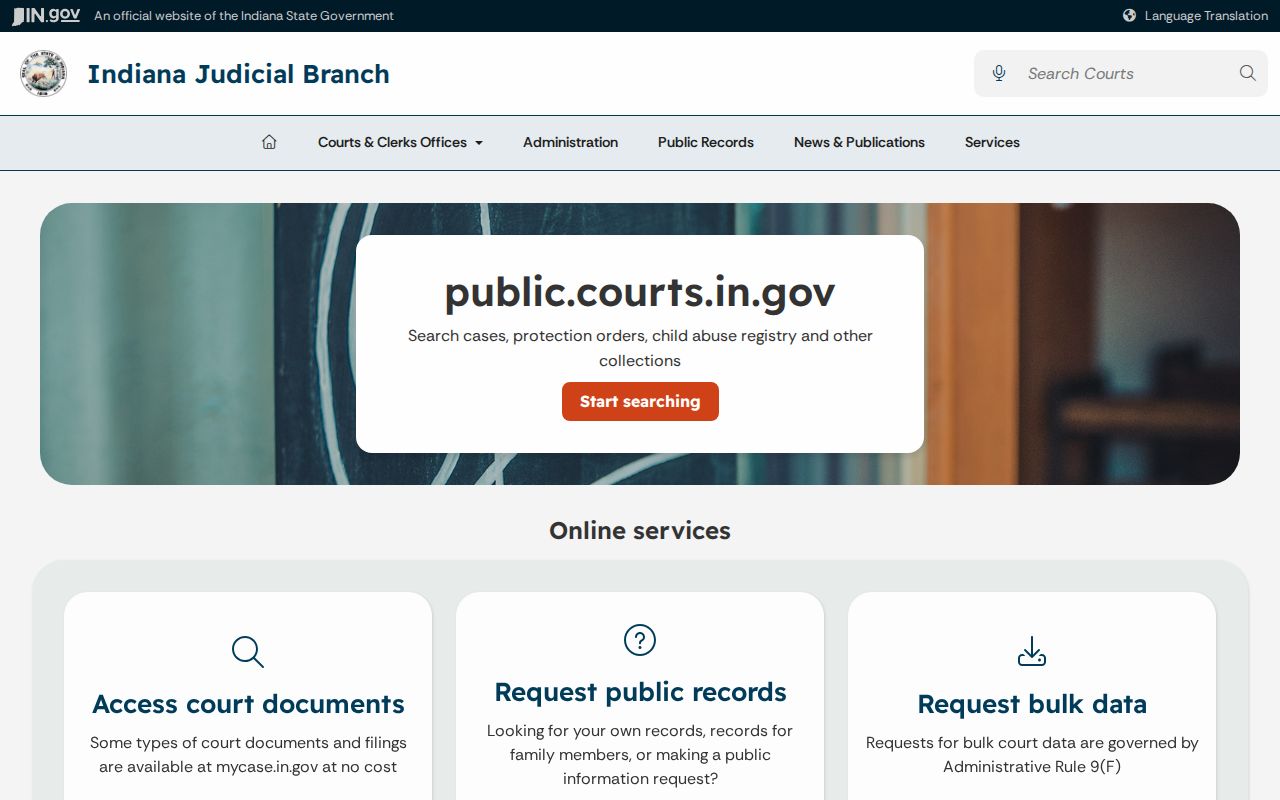
Tell the clerk the precise docket event that came through without its record image attached. That one detail keeps the Fulton County search tight, so staff pull the right filing instead of paging through the whole court file.
Types of Fulton County Court Records
A docket or Chronological Case Summary indexes activity. The underlying Fulton County court file may contain the actual document. Availability depends on the case type and access rule.
- Complaints, petitions, answers, affidavits, motions, responses, summonses, and returns of service.
- Signed orders, judgments, sentencing orders, plea documents, notices, and satisfaction entries.
- Civil, criminal, family-relations, probate, estate, bond, small-claims, and traffic material where public.
- Transcripts obtained through the reporter, plus exhibits or recordings when retained and lawfully available.
- Judgment dockets, payment records, and certified copies maintained by the clerk.
For an exhibit, audio, or video item, ask three things. Ask whether it remains in custody, whether inspection must occur in person, and whether a protective or redaction order applies. Fulton County publishes no exhibit-retention schedule or audio-copy form.
Older Fulton County Court Records
Fulton local rules say computerized recordkeeping began January 1, 1989. Earlier Fulton County court records may require a clerk search. A judgment-docket search, microfilm review, archival inquiry, or physical inspection may also be needed. A missing MyCase result does not establish that an older case never existed.
Give the clerk the court, approximate year, case type, caption, and old case-number form if known. The clerk's duties include records maintenance and microfilming. But the county publishes no pre-1989 catalog, public-terminal map, retention schedule, or turnaround time. Call before travel and ask which index can be checked.
An old reference may also omit hyphens or leading zeros. Preserve the identifier exactly as written. Then ask staff whether a converted number is used in the electronic system. The court code still matters. Circuit and Superior share a clerk but maintain distinct case records. For a historical judgment, name the judgment docket or order sought. Do not assume that every item was scanned into MyCase.
What a Fulton County Court Record Contains
A Fulton case summary begins with identifying fields. It then presents parties, case modules, and a chronological event list. The complete court file can add documents tied to those events. Read labels literally. A filed motion, a hearing setting, a judgment, and a disposition are different events. The docket entry names which one you are seeing.
| Case Number | Uniform identifier with county code 25 and usually 25C01 or 25D01. |
|---|---|
| Header | Maintaining court, case type, status and status date, file date, active indicator, and public caption. |
| Parties | Public names, roles, and counsel. Protected addresses and identifiers should not be copied. |
| Chronology | Dated filings, service, notices, settings, cancellations, orders, judgments, dispositions, sentencing, or transfers. |
| Documents | Name, description, date, page count, and download permission when an event has a public image. |
| Other Modules | Charges, bonds, cross-references, related matters, and financial fields when relevant and public. |
Fulton County Transcripts and Recordings
A court stream, docket description, or audio file is not a certified transcript. Fulton local rules allow a private transcript fee up to $3.50 per page. Private transcripts prepared outside regular hours are paid by the requester under the reporter's terms. State-funded and indigent arrangements are handled separately.
Ask the reporter or maintaining court about timing, deposit terms, and the portion needed. Identify the case, hearing date, court, and segment. Indiana Access Rule 4 recognizes records in all formats. Rule 5 and court management can restrict audio, video, exhibits, treatment material, and protected personal information.
For an exhibit, ask the clerk or reporter whether it was admitted, retained, returned, or covered by an access restriction. The county posts no public exhibit-retention schedule, audio-request form, or video-copy price. A direct, item-specific inquiry is essential. A request for all media in a case may be slower and less precise. Naming the hearing, exhibit, and requested format works better.
Certified Fulton County Court Copies and Fees
A plain copy reproduces an available document. A certified copy carries the clerk's official certification. Ask whether certification or exemplification is needed, but do not ask staff for legal advice. Fulton County does not publish a simple current clerk fee schedule or preparation-time promise.
| Item | Published Amount | Handling |
|---|---|---|
| Plain court-file copy | Not published as a general clerk price | Confirm the current per-page charge and payment method. |
| Certified or exemplified copy | Not published locally | Consult the Indiana Trial Court Fee Manual, then confirm with the clerk. |
| Private transcript | Up to $3.50 per page | Request from the court reporter or maintaining court. |
| Prosecutor APRA copy | $0.10 per page | Prosecutor-office form only, not a general clerk-copy fee. |
Dawn Ziemek, Fulton County Clerk of Courts
815 Main Street
Rochester, IN 46975
Monday-Friday, 8:00 a.m.-4:00 p.m.
574-223-2911
Request Forms and Fulton Court Custody
The county links NextRequest. The prosecutor publishes an Access to Public Records Act form with requestor, inspect-or-copy, description, and contact fields. Those channels concern county-agency records. A pleading, docket, judgment, transcript, or certified case record belongs on the court-record route. Indiana access rules and clerk procedure govern that route.
The official request guidance shown there sends trial-court documents and older records to the local clerk. Transcripts go to the reporter.
List the court, case number, document or event date, description, copy count, certification, and pickup or mail choice. Confirm fees and safe payment instructions before sending funds.
Public Access to Fulton County Court Records
Indiana leans toward openness, yet openness stops short of a download button. A Fulton County docket may show its header. The filing itself can stay sealed or sit only at the courthouse. Sealed cases, mental-health matters, juvenile records, and protected family material stay confidential. So do treatment records, victim or witness details, and identifiers the court must shield.
Key Indiana access rules:
Access Rule 4 establishes public access unless another rule, statute, or order limits it.
Access Rule 5 defines confidential cases, documents, information, and redaction duties.
Access Rule 6 requires a documented process and least restrictive remedy for extraordinary exclusion.
Administrative Rule 9 leaves room for courthouse terminals and written bulk requests alike. MyCase bans data mining and commercial use, so pull statistics from ICOR instead. If a clerk withholds something, ask which rule or order controls and whether a redacted copy can still be viewed.
Indiana Fee Manual for Fulton Court Records
Before you talk money with the clerk, check the Indiana Trial Court Fee Manual. That official manual lists the statewide copy and certification charges. Still, only a Fulton clerk can quote your exact request.
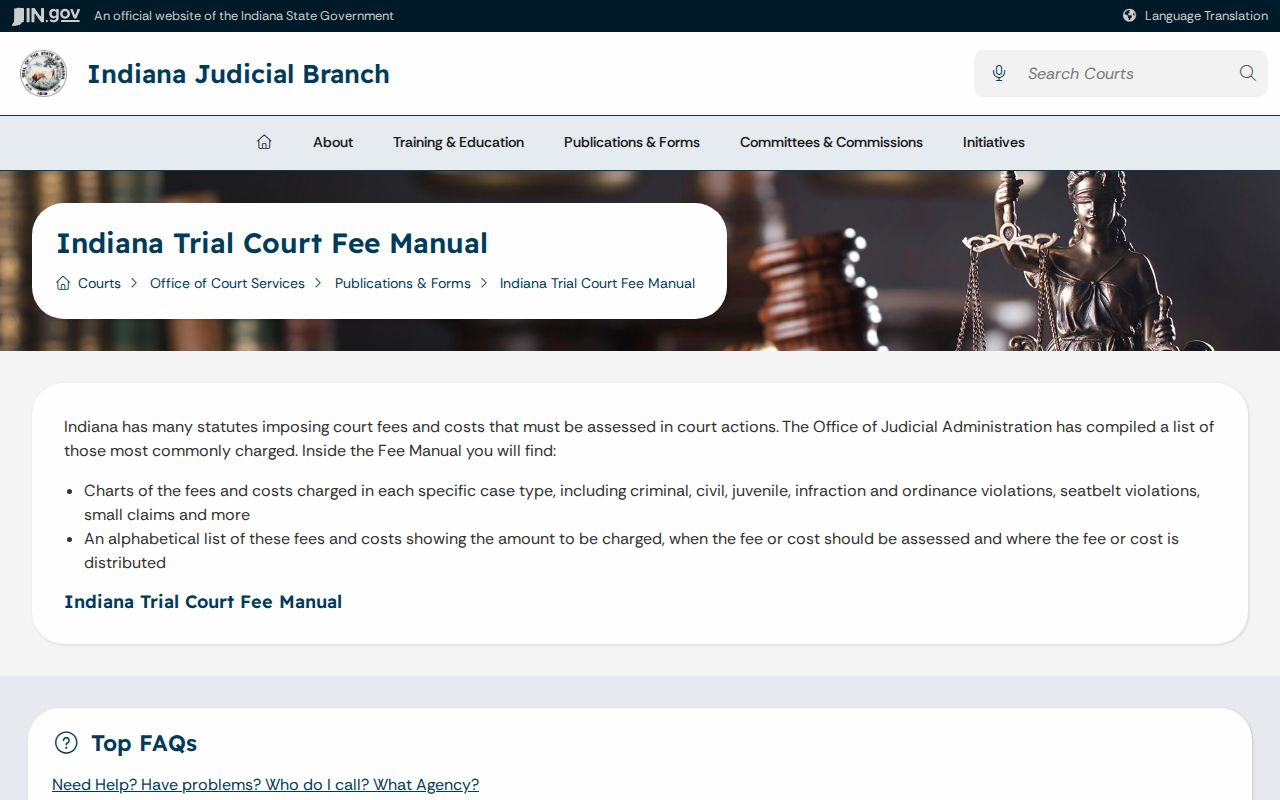
Copy charges, certification costs, payment methods, and delivery all vary with the request. Get a current figure from the Fulton clerk before you mail anything, and note that the prosecutor's separate ten-cent statement covers prosecutor records only.