
How to Search Criminal Dockets
Start your search with Indiana MyCase, the state's public portal. Pick Fulton County, then Criminal & Citation. An exact case number, citation number, or cross reference beats a name every time. With only a name, check the party role, since a match may point to a witness or attorney rather than the defendant. Too many hits? Narrow by status and filing dates.
MyCase costs nothing for ordinary public searches. Expect a CAPTCHA now and then, and know that results can hit a 1,000-item limit. The portal is not the certified record. If a result is missing, thin, old, or restricted, call, fax, mail, or visit the Fulton County Clerk of Courts at the counter. Staff can route a record request, though they cannot give legal advice.
- Open MyCase and choose Case or Name.
- Select Fulton County and Criminal & Citation.
- Enter one identifier or a narrow party name.
- Confirm court, type, status, and file date.
- Read through disposition and request an official copy if needed.
Fulton Criminal Court Codes
A case number tells you which court keeps the file. Indiana assigns Fulton County the code 25. Fulton Circuit Court shows up as 25C01, and Fulton Superior Court as 25D01. The old 25E01 county court no longer exists. Picking the county is not the same as picking a city or town court.
There is no Rochester, Akron, Kewanna, or Fulton municipal court. A case tied to one of those towns still runs through the county system. An official record can say otherwise. Unsure which court holds the criminal docket? Search both, then check the case header to see which court maintains the file.
What a Criminal Docket Shows
The docket opens with a header. From there it may list parties, charges, bonds, events, cross references, related cases, and financial data where public. The event list forms the chronology. A document name can show up without download access, so an event entry and the filing behind it are not the same thing.
| Case header | Number, Fulton court, type, status, status date, and file date. |
|---|---|
| Charges | Charge number, statute, offense date, degree, and modification. |
| Hearings | Date, time, court, officer, result, and cancellation data. |
| Outcomes | Plea, dismissal, judgment, disposition, and sentence are separate. |
| Documents | Metadata may appear while public download rights vary. |
| Financial data | Displayed balances may lag; ask the clerk for current figures. |
Note: A filed charge is only an accusation. A disposition records what actually happened to that charge.
Fulton Criminal Summary Anatomy
One older Fulton Superior misdemeanor summary shows why the order of entries matters. Private details were removed. Its header gave the court, case type, file date, and decided status. Converted legacy events came before the later judgment and disposition entries. The charge module held statute, degree, and offense-date fields. No public bond values or downloadable documents appeared.
That summary illustrates the layout, not a case outcome. Names, numbers, charge text, attorney identifiers, comments, and document names were left out. A converted entry is old data moved into the current system, not a fresh hearing. Note each exact label and date, then look for later entries that modify it.
Bond details deserve equal caution. Public fields can carry a posted date, type, amount, number, status date, and status. Yet a blank public module settles no custody question. For current custody and bond status, ask the clerk or the jail. A cross reference is also just a linked identifier. It is not proof of a second charge, an appeal, or a related person. Follow its label. Open the linked public record when allowed, and confirm the court before concluding anything.
Stages on a Criminal Docket
A criminal docket in Fulton County often starts with initiation and charging. A summons or warrant may follow. So may an initial appearance. Counsel, bond, motions, and pretrial settings may come next. Later entries can record a plea, trial, dismissal, judgment, disposition, sentence, or probation. Not every case hits every step, and continuances or court orders can shuffle the order.
Docket flow: Filing → Arraignment → Pretrial → Plea or Trial → Disposition → Sentencing
- Arraignment
- The charge, rights, and plea stage.
- Setting
- A scheduled event, not proof it occurred.
- Disposition
- The recorded outcome of a case or charge.
- Sentence
- The court's ordered consequence after judgment.
Fulton Felony Docket Rotation
Local rules send criminal dockets in Fulton County down a set path. All misdemeanors and traffic felonies land in the Superior Misdemeanor Division. Other felony filings rotate weekly between the two courts. Week 1 goes to Circuit, and Week 2 to Superior, running Monday to the next Monday. When one incident brings several alleged offenses, the earliest alleged offense controls.
A dismissed and refiled case returns to its original court. An added charge stays with the pending case. A new felony filed during felony probation goes to the supervising court. Treat these as context clues. The filed number and court order control. For aggregate context, use the official Fulton Circuit activity display. It shows court activity compiled from official records.
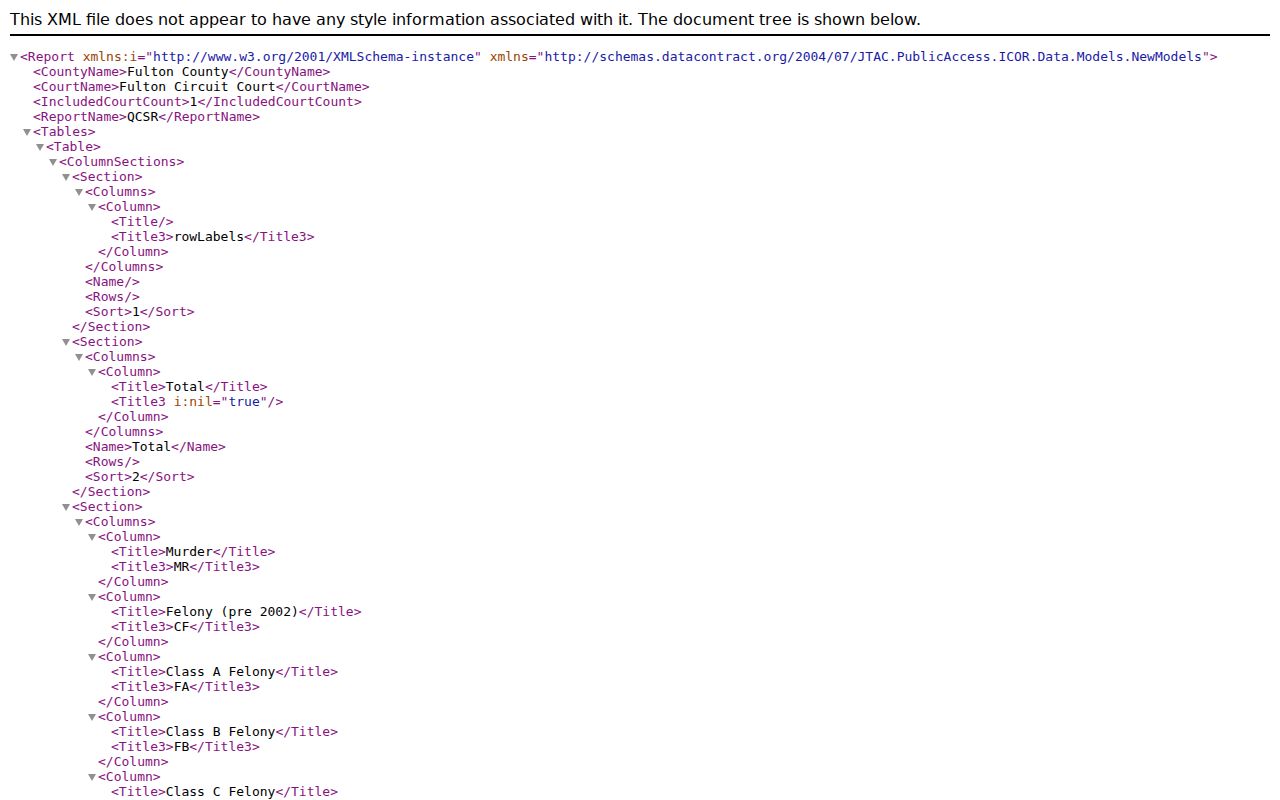
The report is not an individual docket or a count of convictions.
Which Court Holds Criminal Dockets
Fulton Circuit handles all juvenile proceedings plus its rotating felonies. Fulton Superior takes misdemeanors, traffic felonies, infractions, and its own rotating felonies. Both courts sit in the Fulton County Courthouse. The elected clerk keeps the court information. Access to juvenile proceedings is more limited.
| Court | Docket work | Access |
|---|---|---|
| Fulton Circuit, 25C01 | Juvenile and rotating felonies | MyCase, clerk, Circuit office |
| Fulton Superior, 25D01 | Misdemeanors, traffic felonies, infractions, rotating felonies | MyCase, clerk, Superior office |
Want a hearing date? Look at the newest event on the docket first. Then call the office handling the case. Fulton County Circuit takes calls at 574-223-4339, and Superior Court is at 574-223-3506. The county clerk page shows 574-223-2911. A state directory lists a different clerk number. Confirm the right contact before you mail payment or anything sensitive.
Both court offices keep weekday hours from 8:00 a.m. to 4:00 p.m. They close from noon to 1:00 p.m. Bring the case number if you have it, and ask which court keeps the file. To simply confirm a setting, the latest MyCase event and the assigned court office beat a broad records request. For an older converted criminal docket, the clerk can tell you whether to use the electronic summary, microfilm, or another maintained index.
Fulton Criminal Records Behind Dockets
A docket is only the index. Behind each event may sit a charging instrument, a probable-cause affidavit, or a plea agreement. The same file may hold a sentencing or probation order, an exhibit, or a transcript. Look for an allowed image on the MyCase event. If nothing shows there, ask the maintaining clerk for inspection or certification. Give the case number, the event date, and the document you want.
Costs matter here. The clerk counter sits at 815 Main Street, Rochester, Indiana 46975. It is open weekdays from 8:00 a.m. to 4:00 p.m. Mail and fax options are published too. Fulton rules cap the private transcript fee at $3.50 per page. The reporter or court confirms the terms. The county posts no certified-copy price or turnaround promise, so verify both before you order.
A precise request saves everyone time. Say whether you want inspection or a copy. Name the exact sentencing order or docket event, and ask if certification is required. For anything dated before 1989, note that Fulton computerized recordkeeping began that year. An older criminal docket may live on microfilm. It may also sit in a clerk-maintained index instead of a public portal search. E-filing serves authorized filers only; it is not a public search tool or a source of certified copies.
Indiana Courtroom Live Streams sometimes carry an eligible hearing. Watching a stream does not replace the docket, grant you participation rights, or produce a transcript.
Access Rules for Criminal Dockets
Indiana starts from open access. Even so, a Fulton County criminal docket can leave out an attachment. It can also leave out a whole protected case. In some case types a sentencing order appears online while charging papers do not. Expunged, juvenile, mental-health, victim, witness, treatment, and problem-solving records may all be restricted or redacted. The Rule 5 confidentiality page spells out those categories.
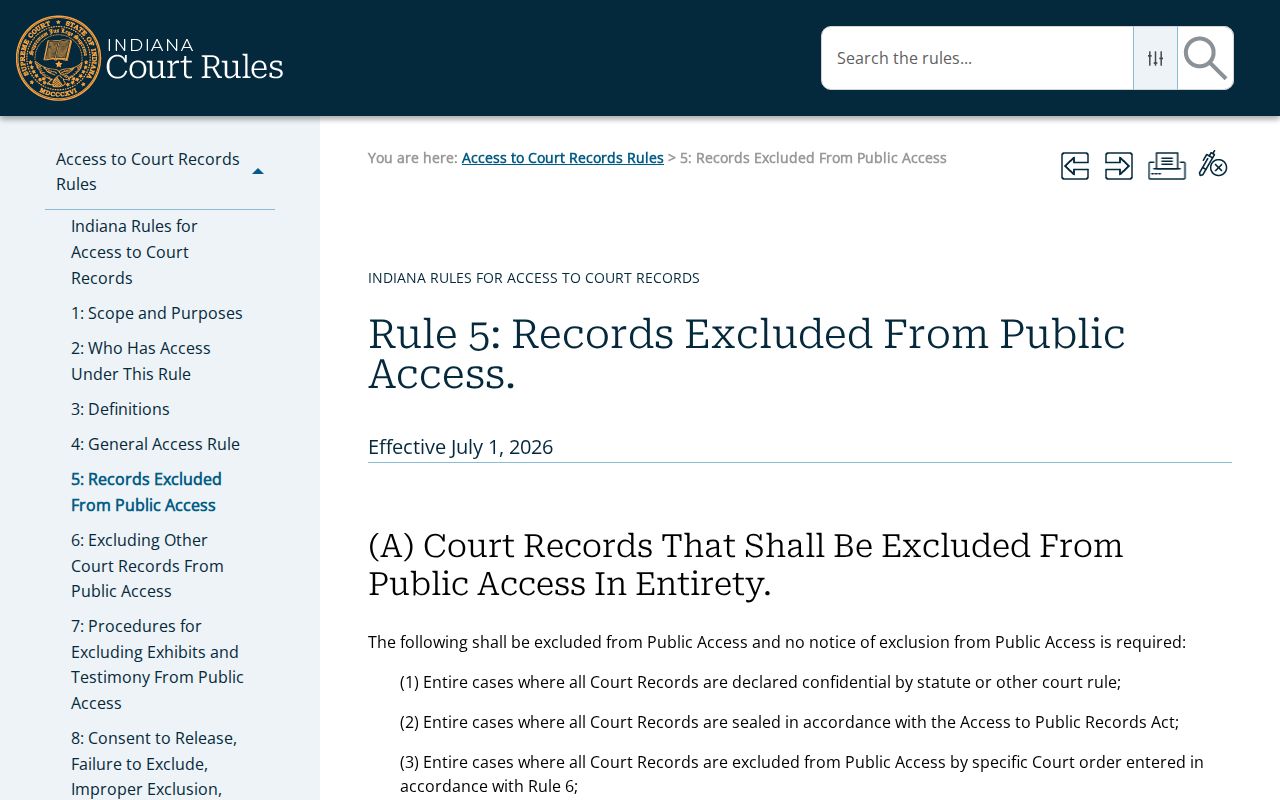
It explains why a header may be visible while a protected document is not.
Key rules:
Access Rule 4 sets public access as the baseline.
Access Rule 5 identifies confidential cases and data.
Access Rule 6 governs extraordinary exclusion.
Fulton Treatment Docket Limits
Fulton rules set fees tied to alcohol and drug assessment. They also cover case management, transfer, and a drug court program. That is fee authority only. It does not create a public roster, calendar, coordinator contact, eligibility policy, or outcome report. State materials cover the wider certified-program network. The Indiana Court Alcohol and Drug Programs resource provides that context.
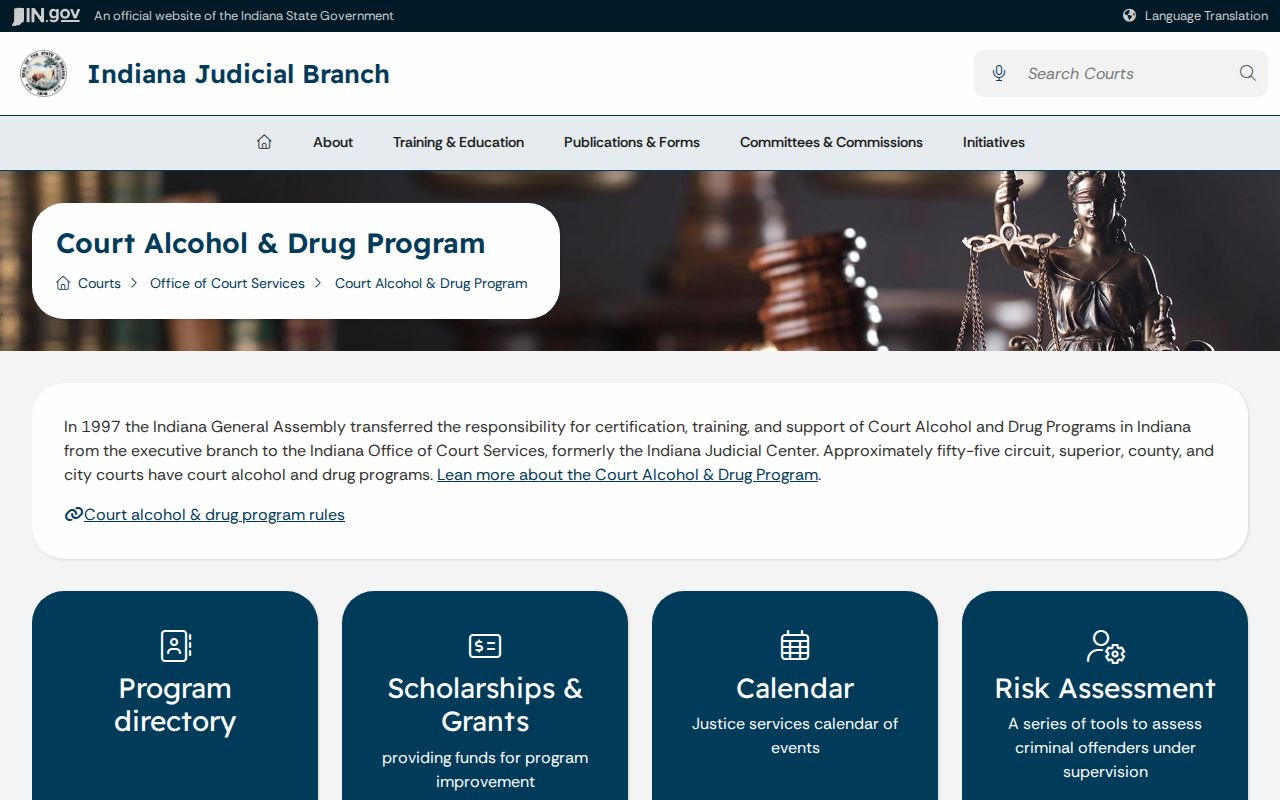
A docket may list a referral or a fee. Treatment, testing, medical, and supervision details stay hidden. So ask the court or clerk only for what is lawfully public. A missing treatment record is not a gap to fill with guesses, and a name match alone never identifies a person or an outcome.